
“Veins of doubt”
FH Dortmund (Germany) Master
“Veins of doubt”
FH Dortmund (Germany) Master
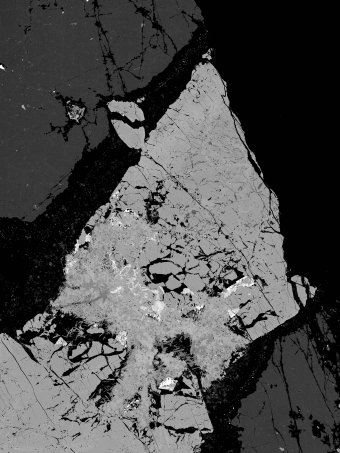
Image from “Veins of doubt” project by Jan Richard Heinicke
Biography
Instagram: @jr_heinicke
Website: www.jr-heinicke.de
Born in 1991 in the Ruhr area in Germany. After studying spatial planning, he completed a second degree in photojournalism in Hanover. His projects focus on the conflict between man's demands on his natural environment and the potential of nature to provide for these needs. In his work, he sees himself as a translator of complex, often scientific, topics to a broad audience.
The project
The small town of Narsaq in Southern Greenland has been caught up in geopolitics, as a treasure lies beneath the steep slopes of the surrounding fjords: large quantities of rare earth elements and uranium. The deposit is among the largest in the world and brought the region into the international spotlight: China wanted to buy the mining license from the licensees while US President Trump renewed his claim to the entire island state after the US election in 2024.
A proposed mine has been a point of debate for decades due to the high content of uranium and thorium in the rocks. Initialy explored as a potential uranium mine by the then ruling danish government the focus shifted to rare earths in the 2000s. The debate surrounding the mine led to a change in government after the elections in 2021. The newly elected government established a ban on Uranium mining but could be forced to drop it as the licensee sued the country for 11.5 billion USD in compensations.
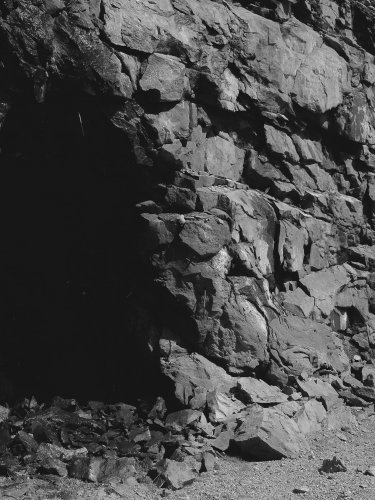
Image from “Veins of doubt” project by Jan Richard Heinicke
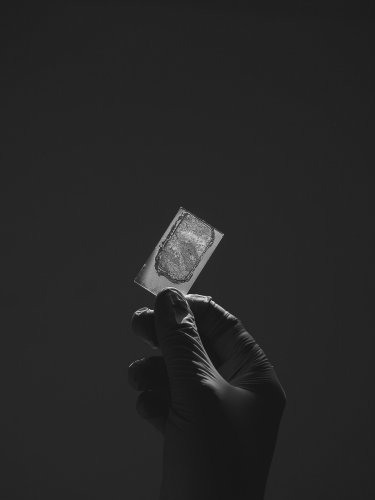
Image from “Veins of doubt” project by Jan Richard Heinicke
The project takes a look at a divided region that has unwittingly become the focus of international attention and whose inhabitants are exhausted by the conflict that has been going on for decades. The project touches topics such as colonialism, extractivism and geopolitics which all collide in the small town of Narsaq. Due to the complex nature of the story I push the boundaries of traditional documentary photography in this project. Therefore I am using scanning electron microscopy to explore thin sections of these 'political rocks' and autoradiography where the radiation of the rocks creates images on photographic material.